Surviving & Thriving as a Pure Vegetarian or Jain Traveller in Japan
Dashi, hidden fish flakes, Jain friendly meals and the phrases that make every restaurant easier. A complete food survival guide for Indian vegetarians.
Why vegetarians struggle at first
Japanese cooking is light and vegetable rich, but almost every savoury dish starts with dashi, a stock made from bonito fish flakes and kelp. Miso soup, noodle broths, tempura dipping sauce and even some salad dressings contain it. A dish that looks purely vegetable can still have fish.
The good news is that awareness is growing fast. Big cities now have Indian restaurants on almost every main street, dedicated vegan cafes and temple cuisine restaurants that have been fully plant based for centuries.
With a little planning, a pure vegetarian or Jain traveller can eat well every single day.
Words and phrases that save meals
Learn two words: "bejitarian" (vegetarian) and "niku nashi, sakana nashi" (no meat, no fish). Add "dashi nashi" for no fish stock and "tamago nashi" for no egg.
Carry a printed food card in Japanese that explains: I do not eat meat, fish, seafood, egg, or fish stock (dashi). Jain travellers add: no onion, garlic, potato, carrot or other root vegetables. Showing a card is polite and far clearer than gestures.
Most staff will happily check with the kitchen. If they are unsure, they will say so honestly, which is a gift in itself.
Safe dishes to look for
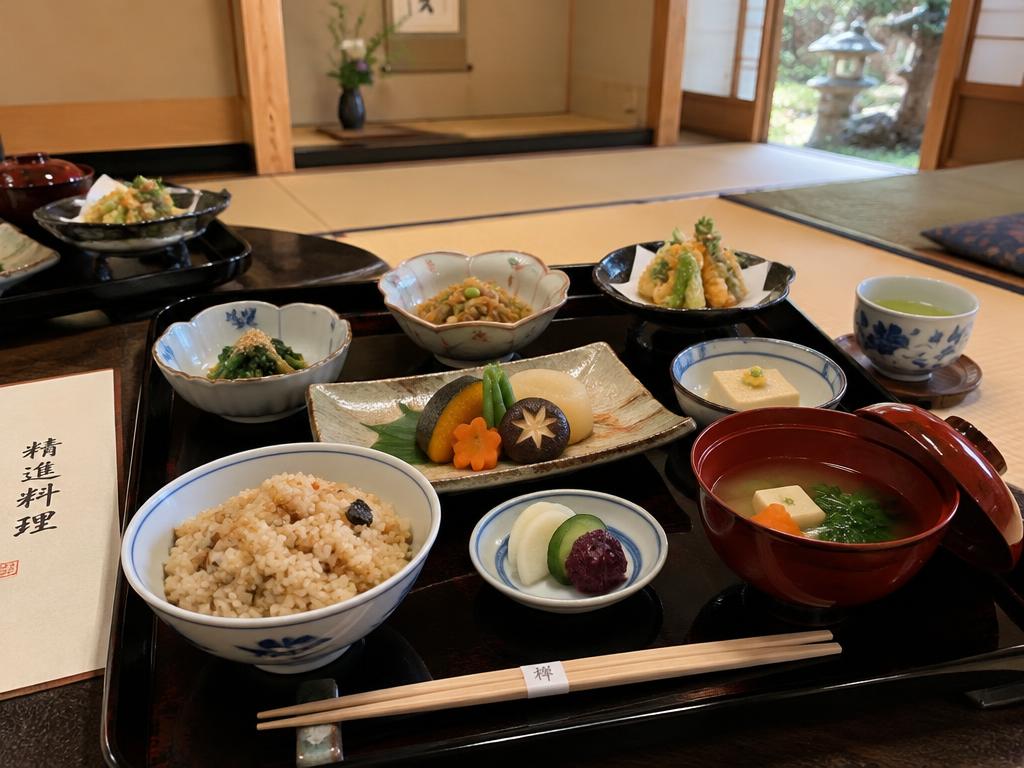
Shojin ryori, the Buddhist temple cuisine of Kyoto and Koyasan, is naturally vegetarian and often free of onion and garlic, making it Jain friendly too. Ask in advance at temple stays.
Inari sushi (rice in sweet fried tofu), kappa maki (cucumber roll), vegetable tempura with salt instead of dipping sauce, onigiri with ume plum or kombu, and plain soba with a vegetarian sauce are common options.
Convenience stores like 7 Eleven, Lawson and FamilyMart sell plain rice balls, bread, fruit, salads, yoghurt and nuts. Check labels for 魚 (fish) and 肉 (meat).
Indian restaurants: your comfort zone
Tokyo, Osaka, Kyoto, Yokohama and even smaller cities like Nagoya and Fukuoka have Indian restaurants, many run by Nepali and Indian families. Expect dal, paneer, chana and naan at ₹900 to ₹1,600 per meal.
Pure veg and Jain kitchens exist in Tokyo's Nishikasai area, home to a large Indian community, and in parts of Osaka and Kobe.
Use the JapanOPedia Indian and veg food directory to find options near your hotel before you land.
Packing a food safety kit
Pack ready to eat pouches like dal makhani and rajma chawal, instant upma and poha, khakhra, thepla, dry fruits and a small pack of masala. Japan allows most packaged vegetarian foods for personal use; avoid meat products and fresh produce.
A small electric kettle is rarely needed because most hotels provide one. Cup noodles labelled vegetarian or vegan are available in some stores.
Jain travellers often carry their own masala and a few days of dry snacks for long travel days.
Eating on tours and in ryokans
Traditional ryokan dinners are multi course and usually fish based. Inform the ryokan at least a week ahead that you need a vegetarian or Jain kaiseki; many will prepare a beautiful plant based menu.
On group tours, confirm in writing that Indian vegetarian meals are included. JapanOPedia group tours include Indian meals on most days for exactly this reason.
For day trips, buy onigiri, bread and fruit in the morning so you are never stuck.
A sample vegetarian day in Kyoto
Breakfast: hotel bread, fruit and yoghurt, or a convenience store onigiri. Lunch: shojin ryori at a temple restaurant in Arashiyama for about ₹2,500. Snack: matcha soft serve and yatsuhashi sweets near Kiyomizu-dera.
Dinner: an Indian restaurant near Kyoto Station with dal, paneer and rice for ₹1,400. Total food spend: around ₹4,500 for the day.
With this rhythm, vegetarians and Jains enjoy Japan without a single hungry evening.